


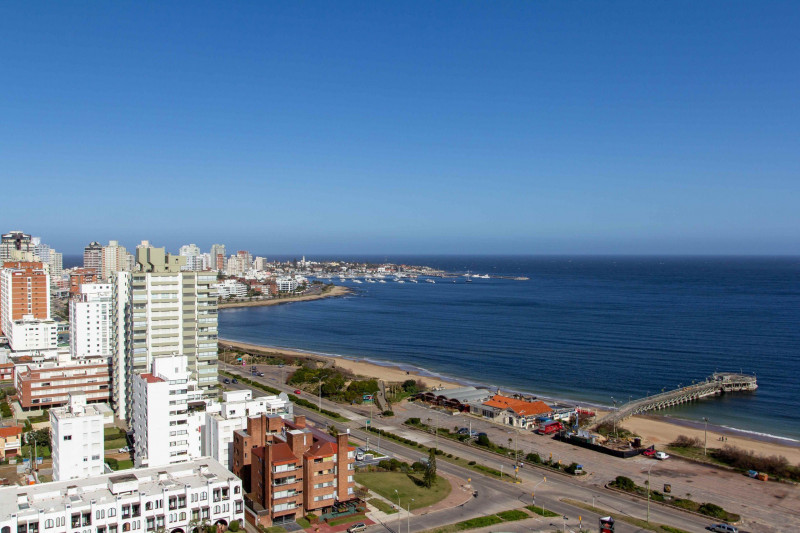
You have found an apartment in Punta del Este advertised for US$350,000 and have enough savings to cover a substantial deposit. Rather than purchasing the property entirely with cash, you would prefer to finance part of the price through a Uruguayan bank. But will a local lender accept your application if you live in the United Kingdom, United States, Canada or another country?
This is an important question for international buyers. Uruguay generally allows foreigners to own residential property without first obtaining residency, but qualifying for a mortgage is a separate matter. Banks assess income, financial history, employment, existing liabilities and whether the applicant meets their requirements for non-resident lending.
Mortgage financing is available to some foreign buyers, including non-residents. However, approval is not automatic, and the conditions may differ from those offered by banks in your home country.
La Cité Real Estate has operated in Uruguay since 1993, assisting international buyers searching for apartments, houses and developments in Punta del Este and surrounding areas. Its experience in property sales, relocation and management provides a practical starting point for understanding the wider responsibilities of buying a home abroad.
This guide examines mortgage eligibility in Uruguay, the documents foreign buyers may need, current published lender conditions, financing alternatives and an illustrative calculation showing how a mortgage could affect the cost of purchasing a property.
Can Foreigners Actually Obtain a Mortgage in Uruguay?
Yes. Some Uruguayan financial institutions offer mortgage products that may be available to qualifying foreign nationals who do not hold permanent residency.
However, being legally entitled to buy property does not create an entitlement to borrow money from a bank. The institution must still be satisfied that the borrower meets its financial and documentary requirements.
For example, Santander Uruguay publishes a mortgage product with eligibility criteria specifically covering non-residents. Its website distinguishes between financing a principal residence, a holiday property and an investment property.
Other banks may have different lending policies. Some mortgage products require Uruguayan residency or locally generated income, while others may consider foreign earnings and international borrowers.
This means the first step should be checking which products are currently available to someone with your particular nationality, country of residence, employment arrangements and source of income.
You can also read La Cité's complete guide to buying property in Uruguay as a foreigner to understand the separate legal requirements involved in becoming a property owner.
Understanding Mortgage Eligibility for Non-Resident Buyers
Banks generally evaluate whether an applicant has sufficient reliable income to meet repayments over the agreed loan term.
For non-residents, this process can involve additional verification because the applicant's employment, tax records and banking history may be located outside Uruguay.
A lender may need documents from the applicant's home country, independent confirmation of income and evidence showing the origin of the deposit.
An Example of Published Santander Requirements
Santander Uruguay's published non-resident mortgage conditions provide an example of the criteria an international buyer may encounter.
The bank lists a minimum household income of US$5,000 per month, or its equivalent in the applicant's home-country currency. It also specifies three years of employment or self-employment continuity for non-resident applicants and a mortgage repayment-to-income limit of 20%.
Age restrictions also apply, and the bank states that applicants must meet the maximum age requirement at the end of the loan term.
These are specific published eligibility criteria, not a promise of approval. The bank can also assess the borrower's credit history, collateral and supporting documentation.
Buyers should obtain the current product conditions and a written eligibility assessment directly from the lender before making financial commitments.
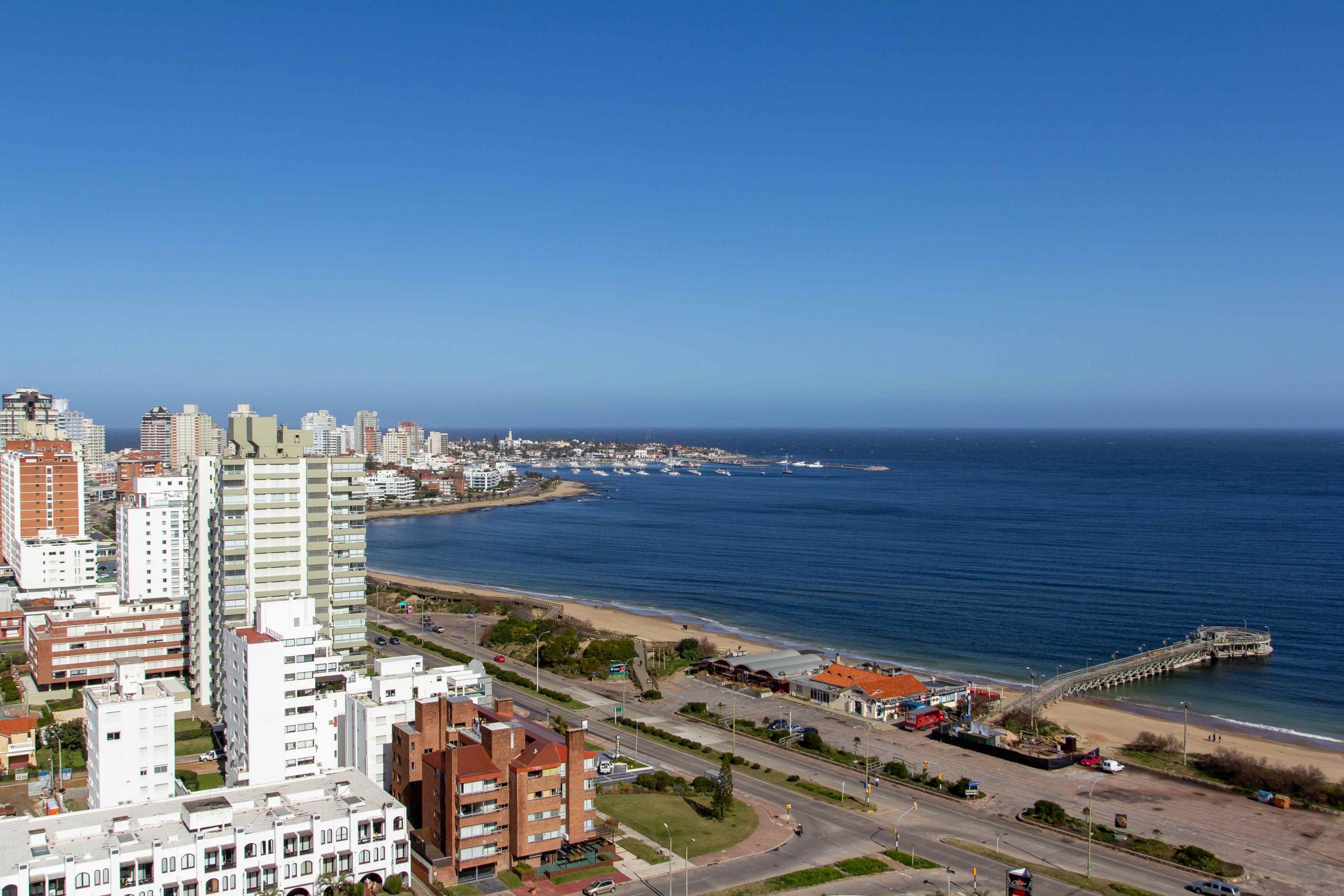
How Much Deposit Do Foreign Buyers Need?
The deposit is one of the first figures a prospective borrower should establish.
Foreign-buyer property guides often describe substantial deposits for non-residents, sometimes using examples where the buyer contributes 40% to 50% of the property price.
However, this should not be treated as a universal minimum. The actual deposit depends on the lender's maximum loan-to-value ratio, the property's valuation, the mortgage product and the applicant's financial profile.
A bank may calculate the maximum loan against its own valuation rather than the price agreed between buyer and seller.
If the valuation is below the purchase price, the buyer may need to contribute more cash than originally expected.
Illustrative Deposit Comparison for a US$350,000 Property
| Deposit | Buyer's Cash | Loan Required |
|---|---|---|
| 30% | US$105,000 | US$245,000 |
| 40% | US$140,000 | US$210,000 |
| 50% | US$175,000 | US$175,000 |
These scenarios simply illustrate the relationship between the cash deposit and the amount borrowed. They do not imply that a bank will approve any of these loan-to-value ratios.
Buyers must also reserve funds for completion costs and ongoing ownership expenses rather than committing all available savings to the deposit.
Mortgage Interest Rates in Uruguay: What Should Foreign Buyers Expect?
Mortgage interest rates vary according to the lender, loan currency, purpose of the purchase, product type and applicable market conditions.
It is therefore important not to assume that all non-residents pay the same rate or that international buyers always face a fixed premium above local applicants.
Santander Uruguay's published mortgage tariff, dated November 2026, provides a useful example of how rates differ between mortgage products.
| Product | Published Rate | Currency Basis |
|---|---|---|
| Non-resident principal residence | 6.75% | US dollars |
| Non-resident investment | 6.95% | US dollars |
| Non-resident principal residence | 4.75% | Unidades Indexadas |
| Non-resident investment | 5.72% | Unidades Indexadas |
Unidades Indexadas, commonly abbreviated as UI, are inflation-linked units. A loan quoted at a lower nominal rate in UI cannot be compared directly with a US-dollar mortgage without accounting for the way the debt and payments are adjusted.
Published interest rates also do not necessarily represent the total borrowing cost. Mortgage-related insurance, administrative charges and other loan expenses may apply.
Ask the lender for the repayment schedule and total financial cost of the proposed loan, rather than comparing interest rates alone.
The figures above are published Santander terms reviewed in November 2026 and should be reconfirmed for applications in 2027.
Which Documents Do Foreign Mortgage Applicants Need?
Preparing documentation early can help prevent avoidable delays.
A foreign applicant may need to provide identification, employment and income evidence, proof of address, financial statements and documents demonstrating the origin of the purchase funds.
Some documents may require certification, apostilles or official translation into Spanish. However, applicants should not pay for these services until the selected bank confirms exactly what it requires.
| Document | Purpose |
|---|---|
| Valid Passport | Identity verification |
| Proof of Address | Confirmation of current residence |
| Employment or Business Records | Verification of professional activity |
| Payslips or Income Certificates | Evidence of repayment capacity |
| Tax Returns | Income verification where requested |
| Bank Statements | Financial history and funds verification |
| Property Documents | Information needed to assess the property offered as security |
| Certified or Apostilled Documents | Authentication where required by the lender |
Santander's published mortgage documentation for non-residents includes identity, address and income records. For self-employed applicants, it also refers to accountant-certified income and relevant tax documentation.
The lender may additionally request property-related documents and a certified statement of assets.
If the purchase is already being negotiated, the bank and the buyer's escribano should coordinate the documents needed to assess the property.
For a wider explanation of purchasing a home, read La Cité's step-by-step guide to the legal property purchase process.
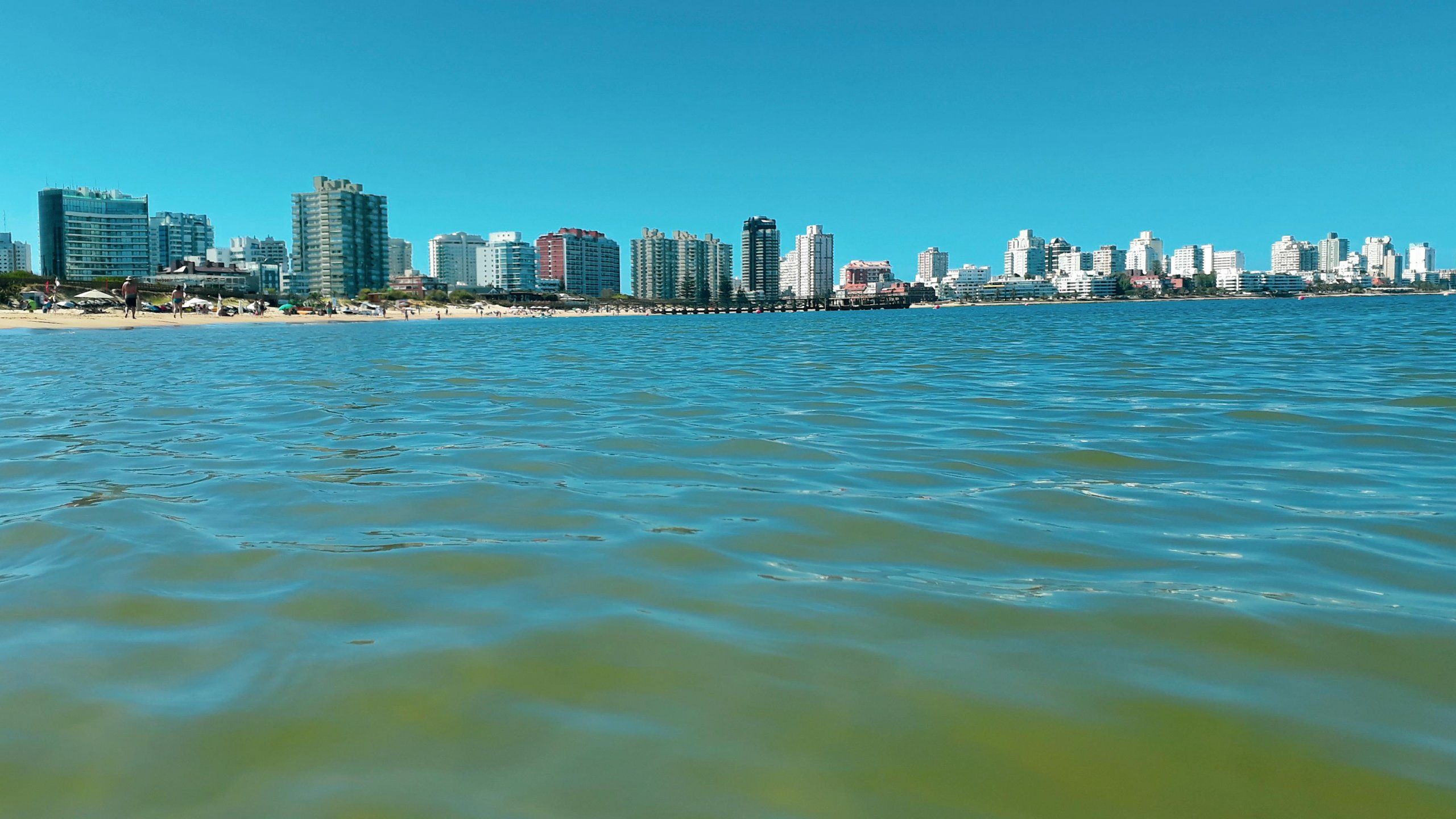
Which Banks Offer Mortgages to Foreign Buyers?
Mortgage availability is product-specific, so the fact that a bank operates in Uruguay does not mean it currently offers a suitable mortgage to non-residents.
Santander Uruguay is a confirmed example of a bank publishing mortgage eligibility conditions for non-resident individuals.
Other established institutions in Uruguay include Banco República, Banco Hipotecario del Uruguay, BBVA, Itaú and Scotiabank. However, their mortgage products, if available, may have different requirements or be limited to applicants with Uruguayan residency or local income.
Buyers should approach potential lenders directly rather than assume that every bank offers the same international borrowing arrangements.
The most useful questions concern whether the bank currently lends to non-residents, which income sources it accepts, the maximum loan-to-value ratio and the documents required for preliminary approval.
If you are also considering opening a local account, La Cité's guide to banking in Uruguay for foreign buyers explains the practical considerations involved in opening accounts and transferring property purchase funds.
Worked Example: Financing a US$350,000 Apartment in Punta del Este
Consider an international buyer purchasing an apartment in Punta del Este for US$350,000.
For this illustration, assume the buyer contributes a 50% deposit of US$175,000 and borrows the remaining US$175,000 through a 15-year mortgage.
Using a hypothetical fixed annual interest rate of 7%, the estimated principal-and-interest repayment would be approximately US$1,573 per month.
If a lender applied a 20% repayment-to-income limit to this loan, the borrower would need approximately US$7,865 in monthly qualifying income before considering any additional lender adjustments.
This example is a mathematical illustration, not a mortgage quotation or pre-approval. The actual repayments and income requirement would depend on the product, borrower, loan term, currency, other liabilities and applicable charges.
What Else Must the Buyer Budget For?
The buyer should also have funds available for estate agency commission, the escribano, property transfer tax, registration, bank fees and any mortgage-related insurance or valuation requirements.
Apartment ownership may also involve monthly gastos comunes, utilities, property taxes and maintenance expenses that are separate from the mortgage payment.
An apartment advertised for US$350,000 therefore requires a financial plan covering far more than the deposit and monthly repayments.
La Cité's guide to the real cost of buying property in Uruguay in 2027 explains these additional expenses in more detail.
Real Property Examples from La Cité's Portfolio
Before deciding how much to borrow, international buyers should compare actual property prices and determine whether the home they want fits their cash and financing capacity.
La Cité's published inventory includes apartments at several price points in Punta del Este and the surrounding area.
| Location | Property Example | Published Asking Price |
|---|---|---|
| Peninsula | 1-bedroom apartment, approximately 41 m² | From US$105,000 |
| Brava | 1-bedroom apartment, approximately 31 m² | From US$118,000 |
| Peninsula | 2-bedroom apartment | From US$198,000 |
| La Barra/Manantiales | 2-bedroom house, 110 m² built on a 300 m² plot | US$200,000 |
These are advertised asking prices, not confirmed completed transactions. Availability and prices should be reconfirmed before relying on an example.
The figures illustrate why buyers should establish their financing position before arranging multiple viewings. A lender may also impose conditions relating to the type, condition and valuation of the property selected.
You can review La Cité's current Uruguay property listings and compare homes within your realistic purchase budget.
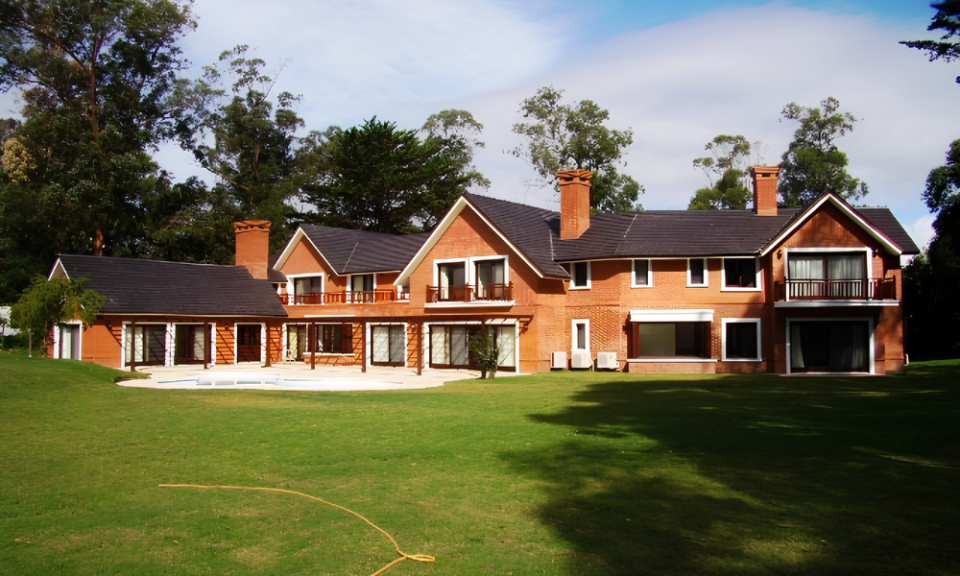
Alternative Ways to Finance Property in Uruguay
A Uruguayan mortgage is not the only possible route for an international buyer.
Some purchasers choose to use existing savings, finance the purchase through assets in their home country or negotiate payment arrangements when buying a development property.
Developer Payment Plans
Some residential developers offer staged payment schedules tied to reservation, construction milestones and completion.
This may allow a purchaser to spread some payments over the construction period rather than paying the full purchase price immediately.
However, developer payment plans are not automatically equivalent to bank mortgages. Buyers should examine the contract, payment milestones, completion obligations and consequences of delays with an independent legal adviser.
La Cité's portfolio of property developments in Uruguay provides a starting point for exploring new residential projects and asking about any payment arrangements currently offered.
Financing Against Property in Your Home Country
Some international buyers consider borrowing against property or other eligible assets they already own in their country of residence.
This may provide purchase capital without requiring a mortgage from a Uruguayan bank.
However, securing debt against an existing home creates substantial risks. If repayments cannot be maintained, the original property may be at risk even if the Uruguayan purchase performs poorly or is difficult to sell.
Buyers should obtain independent advice on affordability, taxation, currency exposure and lending conditions before considering this option.
Seller Financing
In some private transactions, a seller may be willing to accept payments over an agreed period rather than receiving the entire purchase price at completion.
Such arrangements are individually negotiated and should not be assumed to be available on ordinary property listings.
The contract must clearly address repayment obligations, ownership transfer, security, default and applicable legal protections.
Purchasing Entirely with Cash
A cash purchase avoids the uncertainty of mortgage approval and the recurring obligation to make loan repayments.
However, it requires considerably more capital at the outset and may reduce the buyer's available savings for emergencies, maintenance or other investments.
Cash buyers must still comply with banking and source-of-funds requirements and should complete appropriate legal due diligence.
Currency Risk: Borrowing in US Dollars or Inflation-Linked Units
International property buyers should understand the relationship between their income currency and the currency or index used to calculate mortgage repayments.
A borrower earning pounds sterling but repaying a US-dollar mortgage faces exchange-rate risk. If the pound weakens against the dollar, the same monthly dollar payment becomes more expensive in sterling terms.
An inflation-linked mortgage introduces a different form of exposure because the indexed debt and repayments can change with the relevant adjustment mechanism.
A lower published interest rate does not necessarily mean a lower total borrowing cost once currency movements and indexation are considered.
Ask prospective lenders to explain how the loan balance and repayments will behave under different economic scenarios, including changes in exchange rates and inflation.
What Happens if Your Mortgage Is Not Approved?
One of the greatest risks for a buyer who needs financing is committing to a property before the bank has confirmed that borrowing is feasible.
A preliminary discussion with a bank does not necessarily represent final mortgage approval.
The institution may still need to review the complete financial application, assess the property and complete legal and compliance checks.
Santander's published mortgage documentation specifically recommends considering a financing contingency in the property reservation agreement.
This is particularly relevant when the buyer cannot complete the purchase without the loan.
Before signing a reservation agreement, ask your independent escribano to explain how the contract treats unsuccessful financing, deadlines and the return or forfeiture of any deposit.
Mortgage Application Checklist for Foreign Buyers
The following checklist can help you prepare before committing to a purchase that depends on borrowing.
- Confirm whether the lender currently accepts non-resident applicants with your financial and residency profile.
- Ask for the current deposit requirements and maximum loan-to-value ratio.
- Establish the income, employment history and age criteria.
- Request the complete documentation checklist before paying for certified translations or apostilles.
- Compare loan currency, interest rate, repayment term and total borrowing costs.
- Allow for the bank's property valuation and any additional legal requirements.
- Discuss a financing contingency with your escribano before signing a reservation agreement.
- Budget separately for completion costs, taxes, insurance and ongoing property maintenance.
- Confirm how international funds will be transferred and documented.
- Do not treat preliminary eligibility as final approval until the lender issues the necessary confirmation.
Preparing these points before beginning intensive property viewings can reduce the risk of selecting a home that cannot be financed on acceptable terms.

How La Cité Helps International Buyers Plan Their Property Search
Mortgage planning should begin alongside the search for a suitable home rather than after a buyer has already selected a property.
La Cité Real Estate has operated in Uruguay since 1993 and maintains an office at Calle 28 y Gorlero in Punta del Este.
Its property portfolio includes apartments, houses and residential developments across Punta del Este and surrounding locations, allowing international buyers to compare different budgets and property types.
The agency also provides relocation and ongoing property management services, which can be important for buyers who plan to divide their time between Uruguay and another country.
While mortgage eligibility and approval must be determined by the lender, La Cité can help buyers identify suitable properties and understand practical considerations such as building expenses, maintenance and local ownership arrangements.
For overseas owners, La Cité's property management services may also help with inspections and maintenance after completion.
Frequently Asked Questions About Mortgages in Uruguay
Can I get a mortgage in Uruguay without permanent residency?
Potentially, yes. Some banks offer mortgage products that may be available to qualifying non-residents. Santander Uruguay publishes specific eligibility conditions for non-resident borrowers. However, approval depends on income, employment history, age, credit assessment, property valuation and other lender requirements. Buyers should obtain current written conditions from the institution before assuming finance is available.
How much deposit does a foreign buyer need in Uruguay?
There is no single deposit percentage applicable to every non-resident mortgage. The amount depends on the bank, loan-to-value limit, property valuation and borrower profile. Some international financing examples assume deposits of 40% to 50%, but these figures should not be treated as guaranteed lender requirements. Ask the bank for a property-specific assessment.
What mortgage interest rates are available to non-residents?
Rates depend on the lender and mortgage product. Santander's published November 2026 tariff lists US-dollar rates of 6.75% for a non-resident principal residence and 6.95% for a non-resident investment loan. Other currencies and indexed products have different terms. Rates, fees and availability should be checked directly with the lender before applying in 2027.
Can UK, US and Canadian buyers apply for mortgages in Uruguay?
Foreign nationals may be able to apply for a mortgage in Uruguay, but eligibility is not determined by nationality alone. Banks assess the applicant's country of residence, financial circumstances, source of income and ability to meet the relevant requirements. Contact the lender to confirm whether it currently accepts applicants with your particular profile.
Will temporary residency improve my mortgage application?
Residency status may affect which mortgage products are available, but temporary residency does not automatically qualify a buyer for resident lending conditions. Banks may also consider whether income is generated in Uruguay and how long the applicant has maintained employment or financial links with the country. Ask each lender how it classifies your specific residency status.
Can I obtain a mortgage using foreign employment income?
Some non-resident mortgage products may consider income earned outside Uruguay. The lender will usually require sufficient documentation to verify the income, employment history and applicant's capacity to repay. Self-employed buyers may need additional accountant-certified records and tax documentation.
Can cryptocurrency holdings be used to qualify for a mortgage?
A bank may require conventional evidence of income and the legitimate origin of funds. Whether cryptocurrency-derived assets are acceptable depends on the institution's current compliance and credit policies. Buyers should not assume that the value of cryptocurrency holdings will be accepted as qualifying income or an approved source of funds without explicit confirmation from the lender.
Is it better to buy property in Uruguay with cash or a mortgage?
The better approach depends on available savings, income stability, borrowing costs and personal financial priorities. A cash purchase avoids mortgage repayments but requires more capital upfront. Financing can preserve some liquidity but introduces interest costs, approval conditions and potentially currency risk. Buyers should compare both scenarios using their actual financial circumstances.
Plan Your Uruguay Property Purchase with La Cité Real Estate
Obtaining a mortgage in Uruguay as a foreign buyer is possible in certain circumstances, but the process requires realistic planning and confirmation from the lender.
Deposit requirements, income evidence, property valuation, loan currency and borrowing costs can all influence whether mortgage financing is suitable for your purchase.
Before making an offer, establish what you can afford, obtain current lending information and discuss the appropriate contractual protections with your independent escribano.
La Cité Real Estate provides local property knowledge and access to homes and developments across Punta del Este, La Barra, José Ignacio and other established residential areas.
Explore La Cité's properties for sale in Uruguay or contact the local team to discuss your budget, preferred location and property requirements.
Call La Cité's Punta del Este office on +598 4244 5368 or email lacite@lacite.com.uy to enquire about available homes and viewing arrangements.
Mortgage terms and property availability may change. This guide provides general information and illustrative calculations rather than financial, lending, legal or tax advice. Buyers should obtain independent professional guidance and confirm all mortgage conditions directly with the relevant financial institution.


