



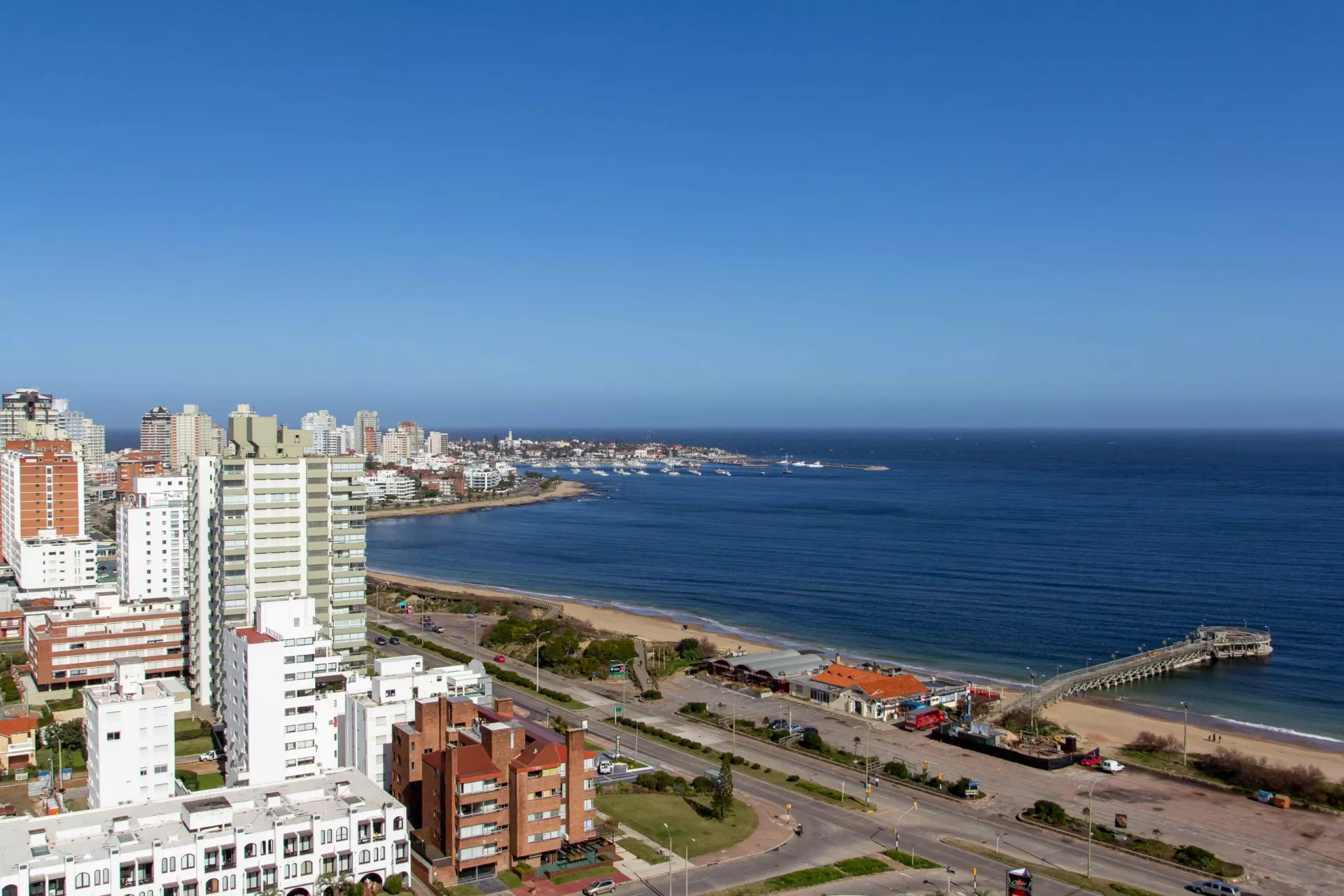
You have US$300,000 available to buy a property in Uruguay and find an apartment in Punta del Este advertised for US$285,000. At first glance, it appears to fit your budget. But once estate agency commission, transfer tax, the escribano's fees, registration costs and other expenses are included, is US$15,000 enough to complete the purchase?
This is one of the most important questions international buyers need to answer before making an offer. An attractive asking price does not necessarily reflect the total amount required to become the legal owner of a property in Uruguay.
There is also a difference between purchasing an apartment in an established building and buying a detached home in José Ignacio or a new development in Punta del Este. Each property can involve different legal checks, maintenance responsibilities and financial commitments.
La Cité Real Estate has operated in Uruguay since 1993, assisting international buyers across Punta del Este and surrounding areas. Its services include property sales, relocation assistance and ongoing property management, helping buyers consider both the transaction and the practicalities of ownership.
This guide explains the real cost of buying property in Uruguay in 2027, including transfer tax, estate agency commission, professional fees, registration, financing and annual expenses. It also uses published La Cité property examples and an illustrative purchase calculation to explain why a realistic budget should be prepared before signing a contract.
Want to establish what you can afford before arranging viewings? Explore La Cité's properties for sale in Uruguay and request a property-specific buying-cost estimate before making an offer.
Purchase Price and Property Market Context in Uruguay
Property prices in Uruguay vary significantly according to location, property type, building quality and proximity to the coast. The Punta del Este Peninsula, Playa Brava, Playa Mansa, La Barra and José Ignacio offer different property markets, even when they appear relatively close on a map.
A smaller apartment in the Peninsula may suit a buyer who wants restaurants, shops and the marina within walking distance. A property in Brava may appeal because of Atlantic Ocean views and modern residential facilities. A detached house farther along the coast may provide more privacy and outdoor space, but also require greater maintenance.
La Cité's published inventory demonstrates these differences. Its featured properties have included a two-bedroom apartment in Brava advertised from approximately US$380,000 and a two-bedroom apartment in Mansa advertised from approximately US$440,000.
These figures are asking prices rather than market averages or completed transaction values. Availability and prices may change. Nevertheless, they demonstrate why comparing individual properties is more useful than relying exclusively on a general price-per-square-metre estimate.
Buyers considering a wider relocation should also compare Montevideo with Punta del Este. Montevideo offers an established urban residential market with year-round services, while Punta del Este combines permanent residential communities with a property market influenced by seasonal coastal demand.
For location-specific comparisons, read La Cité's Punta del Este luxury property guide.

Property Transfer Tax in Uruguay: How Is ITP Calculated?
The Impuesto a las Transmisiones Patrimoniales, commonly known as ITP, is one of the main taxes associated with purchasing property in Uruguay.
In a standard property transfer, the buyer generally pays ITP at a rate of 2%. However, international buyers should be particularly careful about how the taxable amount is determined.
The tax is generally based on the applicable official cadastral value adjusted under the relevant tax rules, rather than automatically being calculated on the agreed purchase price.
Consider a hypothetical apartment purchased for US$300,000. If its applicable adjusted cadastral value is equivalent to US$180,000 and the standard buyer rate applies, the ITP would be US$3,600.
Calculating 2% of the US$300,000 purchase price would instead produce US$6,000. That calculation should not be presented as the actual tax payable without first establishing the correct taxable value.
The escribano handling the transaction should confirm the official valuation, applicable adjustments and tax treatment. Two properties with the same asking price may therefore have different ITP liabilities.
Before signing a reservation agreement, request a written ITP estimate based on the exact property documentation.
Real Estate Agency Commission: What Should Buyers Budget?
Estate agency commission is another important expense international buyers should investigate from the beginning.
In Uruguay, buyers commonly pay estate agency commission. This differs from countries where sellers normally pay all agency fees.
La Cité has published a sales commission of 3.28% of the purchase price plus 22% VAT, equivalent to approximately 4% in total. Confirm the applicable rate and terms with the agency before entering a transaction.
For a property purchased for US$300,000, a total commission of approximately 4% would amount to US$12,000. For a US$400,000 property, it would amount to approximately US$16,000.
This means a buyer considering a property at the upper end of their budget should not ignore commission when assessing affordability.
La Cité's local team assists international purchasers with property searches and buying coordination. Its Punta del Este office is situated at Calle 28 y Gorlero, providing a local point of contact throughout the process.
Escribano Fees and Independent Legal Advice
Every property purchase should involve appropriate legal due diligence. In Uruguay, the escribano is the notarial legal professional responsible for essential aspects of the transfer.
The escribano's work includes examining registered ownership, reviewing title documentation, investigating relevant legal issues, preparing the deed and coordinating registration.
These responsibilities make the escribano essential to the purchase, rather than simply someone who witnesses signatures.
Professional fees depend on the applicable notarial tariff and the work required. Buyers should obtain an itemised quotation rather than assume that every purchase has the same notarial costs.
Ask whether the quote includes title searches, deed preparation, certificates, registration administration and applicable taxes on professional services.
An independent lawyer may also be engaged when additional contractual, corporate, immigration or financial advice is required. The need depends on the complexity of the purchase.
For international purchasers, it is useful to clarify each professional's responsibilities before paying for services that might overlap.
Registration Fees and Administrative Costs
The buying process also involves registration and supporting documentation. Ownership documentation must be properly recorded through the relevant legal procedure.
The escribano normally coordinates registration documents and associated formalities. Buyers may also encounter fees for certificates, searches, translations or other transaction-specific requirements.
Unlike agency commission, these expenses cannot all be accurately estimated using one universal percentage of the price.
Request a written closing estimate showing which charges are included in the escribano's professional fee and which are billed separately.
How Much Does a US$300,000 Property Really Cost?
The following illustration shows how several major costs can affect a purchase budget. It is not an actual La Cité transaction.
The calculation assumes a US$300,000 agreed price, buyer commission of approximately 4% and an adjusted cadastral value equivalent to US$180,000.
| Cost | Calculation | Estimated Amount |
|---|---|---|
| Purchase price | Agreed property price | US$300,000 |
| Estate agency commission | Approximately 4% | US$12,000 |
| ITP transfer tax | 2% of assumed adjusted cadastral value of US$180,000 | US$3,600 |
| Escribano | According to tariff and work required | Written quotation required |
| Registration and certificates | Transaction-specific costs | Written estimate required |
| Independent inspection | If appropriate | Written quotation required |
| Currency exchange and banking | Depends on payment arrangements | Bank quotation required |
| Total of stated amounts | Excludes variable professional and other costs | US$315,600 |
In this example, the buyer already needs US$15,600 above the agreed price before including notarial fees, registration, inspections, banking or other expenses.
Therefore, someone with exactly US$300,000 available cannot safely assume they can buy a property advertised at US$300,000.
The better approach is to establish the maximum affordable property price after reserving funds for all acquisition expenses.
Read La Cité's guide to taxes, fees and property closing costs in Uruguay for more background.
Hidden Costs International Buyers Should Consider
Some expenses become clear only when buyers begin investigating a particular property. They are not necessarily unusual charges, but they can materially affect the total investment.
Building Inspections
For older apartments or coastal properties, an independent technical inspection can identify issues involving moisture, waterproofing, electrical installations, structural components and deferred maintenance.
Salt exposure and coastal weather may be relevant for properties near the sea. The inspection should be appropriate to the construction, condition and location.
Boundary and Construction Checks
For detached houses and land, it may be necessary to check plot boundaries, access rights, approved building works and differences between existing structures and registered documentation.
Properties with extensions, guest accommodation or additional buildings may require more investigation than straightforward apartments.
Banking and Currency Exchange
Uruguayan property is commonly advertised in US dollars, but buyers may hold their funds in pounds, euros or other currencies.
Exchange-rate movements, international bank charges and transfer requirements can change the amount available for completion.
Before making a substantial transfer, ask your bank about charges, payment limits, verification procedures and expected processing times.
Initial Repairs and Furnishing
Furniture, appliances, security equipment, decoration and repairs may all require additional spending after completion.
These costs are especially important if you plan to occupy the property immediately or use it for seasonal letting.

Buying a New Development Versus a Resale Property
A new development and an existing home can involve different financial and legal risks.
With a resale property, buyers can generally inspect the completed home, assess shared facilities and ask about previous maintenance costs. Older buildings may also have outstanding repairs or planned special contributions.
For a development under construction, buyers may rely on approved plans, technical specifications and contractual completion arrangements rather than a finished property.
Investigate the project's legal position, payment terms, delivery schedule and developer obligations before signing.
Do not assume the tax treatment or purchase arrangements will be identical for every new development and resale property. Ask a qualified local professional to confirm the requirements for the specific transaction.
Annual Property Ownership Costs in Uruguay
Acquisition costs are only one part of ownership. After completion, buyers also need an annual budget for taxes, utilities, building expenses and repairs.
Contribución Inmobiliaria
Contribución Inmobiliaria is a departmental property tax. Its calculation depends on local rules and the property's valuation and classification.
Before buying, request the latest assessment and confirmation that any outstanding amounts have been addressed.
Impuesto de Primaria
Uruguay also applies Impuesto de Primaria to qualifying properties. The amount depends on the circumstances and relevant valuation.
Ask your escribano to confirm whether the tax applies and what it means for future ownership.
Gastos Comunes
For apartment buyers, gastos comunes can be one of the most significant regular expenses. They fund shared facilities and building operations, potentially including lifts, cleaning, staff, security, gardens, pools and administration.
A building with extensive amenities may have substantially different operating costs from a smaller residential block.
Ask for recent statements, the building's financial position and details of any planned extraordinary contributions.
Insurance, Utilities and Maintenance
Electricity, water, internet, insurance and repairs should also be included in your annual budget. Detached homes may require additional spending on gardens, pools and external structures.
Properties near the sea can require attention to humidity, salt exposure and weather-related wear, especially when empty for part of the year.
La Cité Property Examples: Comparing Purchase and Ownership Costs
La Cité's published property portfolio illustrates how similar buying decisions can involve different locations and running expenses.
A two-bedroom apartment in Playa Brava advertised from approximately US$380,000 represents a different purchase from a two-bedroom apartment in Mansa advertised from approximately US$440,000.
These asking prices alone do not explain the differences. Location, views, floor area, facilities, building condition and monthly gastos comunes all matter.
A building with extensive shared amenities may offer convenience but also have higher operating expenses. A cheaper older apartment may require repairs that are not visible in the listing photographs.
Want to assess real properties rather than rely on national averages? Browse La Cité's property listings and request the actual taxes, building charges and maintenance information for each home.
Who Will Manage Your Property When You Are Overseas?
International buyers should also consider what happens to their property when they are outside Uruguay, particularly if the home is used seasonally or rented to other occupants.
La Cité provides a property management service for owners requiring local oversight.
The service is led by Lucía Moreira, whom La Cité identifies as a licensed estate agent with more than 12 years of experience managing residential and seasonal properties on Uruguay's southeastern coast.
La Cité reports more than 80 repeat management clients, including owners from the United Kingdom, United States, France, Brazil and Canada.
Its published services include twice-weekly inspections, written and photographic reporting, utility monitoring, maintenance coordination, security liaison and monthly financial statements.
The precise service package and fees should be confirmed directly before including them in your annual budget.
Learn more about La Cité's property management service.
When Are Property Purchase Costs Paid?
Not every purchase expense is paid on the same day. Timing depends on the agreement, legal requirements and services commissioned.
A preliminary contract may involve a deposit, with the amount and payment conditions stated in the agreement. Professional investigations and technical inspections may require payment during due diligence.
Taxes, professional fees and registration expenses must be arranged in the appropriate legal sequence.
Ask your escribano for a written timetable showing when funds are needed, who receives them and how each payment is documented. International buyers should allow adequate time for currency exchange, banking checks and transfers.
Checklist Before Buying Property in Uruguay
- Establish your total budget. Separate the maximum purchase price from transaction expenses.
- Confirm the property location. Compare amenities, accessibility and suitability for long-term use.
- Check the ITP calculation. Request the applicable adjusted cadastral valuation and tax estimate.
- Confirm agency commission. Obtain the rate and payment terms in writing.
- Appoint an escribano. Arrange title investigations and an itemised quotation.
- Review legal documentation. Confirm ownership, charges, restrictions and building records.
- Commission technical checks. Arrange surveys or inspections when appropriate.
- Calculate annual costs. Review taxes, gastos comunes, insurance and maintenance.
- Plan the payments. Confirm currency conversion, international transfers and deadlines.
- Consider property management. Decide how the home will be maintained while you are abroad.
Frequently Asked Questions About Buying Property in Uruguay
There is no single reliable percentage for every transaction. Buyers need to budget for agency commission, ITP, professional fees, registration, certificates and other expenses. The exact total depends on the purchase price, adjusted cadastral value and the property's circumstances.
For a standard property transfer, the buyer generally pays ITP at 2% of the applicable adjusted cadastral value. It is not automatically 2% of the agreed purchase price. Your escribano should confirm the correct tax calculation.
Buyers commonly pay agency commission in Uruguay. La Cité has published a sales commission of 3.28% plus 22% VAT, equivalent to approximately 4%. Confirm the current rate and contractual terms before committing.
Foreigners can generally buy residential property in Uruguay without first becoming permanent residents. Property ownership and immigration status are separate matters, so buyers planning to relocate should investigate residency requirements independently.
An escribano performs essential legal work during a property transfer, including investigating title, reviewing documents, preparing the deed and coordinating formalities. Request a detailed quotation outlining the included services.
Financing may be available depending on the lender, your financial situation, residence status and the property. Eligibility, rates and fees vary, so obtain a current lender assessment before relying on a mortgage.
Gastos comunes are shared building or development expenses. They may cover lifts, staff, cleaning, security, swimming pools, gardens and administration. Request the actual charges before making an offer.
Coastal properties can require additional attention because of salt exposure, humidity and weather. However, maintenance costs depend on construction, condition and upkeep rather than location alone. An inspection helps identify the specific risks.
Not every owner needs professional management, but it may be helpful when a home is vacant for extended periods. La Cité offers property inspections and maintenance coordination. Confirm the scope and fees before arranging services.
La Cité helps international buyers search for properties and coordinate purchasing plans. Its published services also include relocation support and property management. Buyers can review the company's inventory and contact its Punta del Este office.
Plan Your Uruguay Property Purchase with a Clear Budget
The real cost of buying property in Uruguay cannot be understood from the advertised price alone.
Estate agency commission, transfer tax, legal and registration expenses, technical checks and maintenance should all be considered before making a commitment.
La Cité's property portfolio helps buyers compare homes by location, condition, amenities and total cost of ownership rather than simply looking for the lowest asking price.
For international purchasers, its sales, relocation and management services can also help coordinate the search with the wider responsibilities of owning property abroad.
Ready to find a property that suits your complete budget? Explore La Cité's current properties for sale or contact La Cité Real Estate to discuss your plans.
You can also call the Punta del Este office on +598 4244 5368.
Property availability, tax rules, professional charges and financing conditions may change. Always request property-specific calculations and professional advice before signing a contract or transferring funds.


