


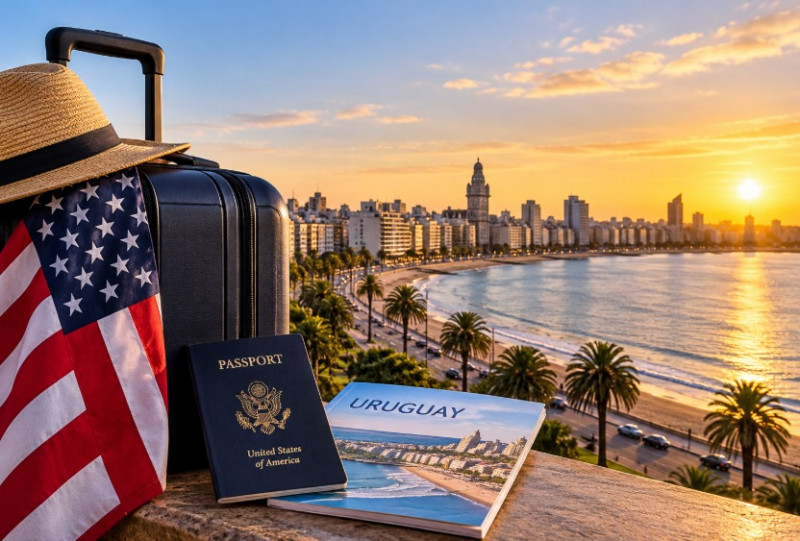
Moving from the United States to Uruguay can be appealing for very different reasons. Some Americans are planning retirement, others want a permanent coastal home, and an increasing number are looking for a slower pace of life while continuing to work or manage investments internationally.
The move, however, involves much more than comparing property prices. Residency, healthcare, banking, taxation, neighbourhood choice and the practicalities of managing a home all need to be considered together.
La Cité Real Estate has operated in Uruguay since 1993 and works with international buyers from the United States and other countries. Alongside property sales, the company provides relocation support and property management, which can help buyers assess what day-to-day life will actually look like after the purchase.
This guide covers the main points Americans should investigate before relocating to Uruguay in 2026.

Why Americans Consider Moving to Uruguay
Uruguay combines a relatively compact geography with several very different lifestyles.
Montevideo offers capital-city services, established residential neighbourhoods and an extensive waterfront. Punta del Este provides a more international coastal environment with apartments, villas and seasonal activity. José Ignacio is lower density and more private, while places further along the coast suit buyers looking for quieter surroundings.
Time-zone compatibility is another practical advantage for Americans who continue working with U.S. clients or employers. Uruguay operates on UTC-3 and does not currently observe daylight saving time, placing it relatively close to U.S. Eastern Time throughout the year.
The right reason to relocate, however, should be based on how Uruguay fits your daily life rather than a general list of country rankings or lifestyle claims.
Can Americans Visit Uruguay Without a Visa?
U.S. citizens currently do not require a tourist visa for visits to Uruguay of 90 days or less.
That makes an extended research trip possible before making a permanent move. Spending meaningful time in Montevideo, Punta del Este and other locations is strongly recommended before committing to a home.
Tourist entry should not be confused with legal residence. If you intend to establish Uruguay as your home, you need to investigate the appropriate residency procedure separately.
How Residency Works in Uruguay
Uruguay offers both temporary and permanent legal residence routes for foreign nationals.
The Dirección Nacional de Migración publishes the current requirements for each residency category. Documentation can include valid identification, criminal-record certificates and other evidence depending on the route being used.
For U.S.-born applicants, Uruguay's permanent-residence guidance specifically notes a procedure involving fingerprints through Interpol in Montevideo for obtaining the relevant FBI background information.
Because immigration requirements can change, use the official government checklist rather than relying on a fixed income threshold quoted in an older relocation article.
Check Uruguay's current legal residency requirements.
Where Should Americans Live in Uruguay?
| Location | Lifestyle | Best Suited To |
|---|---|---|
| Montevideo | Urban, year-round and waterfront | Permanent residents, professionals and families wanting city services |
| Punta del Este | Coastal, international and more seasonal | Second-home owners, retirees and buyers prioritising the coast |
| José Ignacio | Private, low density and design-led | Buyers prioritising space, privacy and premium coastal living |
| La Barra | Beach-oriented with restaurants and social life | Buyers wanting coastal character with Punta del Este nearby |
Living in Montevideo

For Americans making a permanent move, Montevideo often provides the easiest transition because of its concentration of healthcare, schools, shops, restaurants and professional services.
Pocitos is popular with buyers who want apartment living close to the Rambla. Carrasco offers larger homes and a more spacious residential setting, while Punta Carretas combines coastal access with city amenities.
Before purchasing, rent in the area if possible or spend enough time there to understand traffic, noise, parking and your normal journey to healthcare, schools or work.
Read La Cité's Montevideo Real Estate Guide.
Moving to Punta del Este

Punta del Este provides a very different relocation experience.
Playa Brava, Playa Mansa, Peninsula, Golf, Beverly Hills and Rincón del Indio each suit different priorities. Buyers can choose between managed apartments, penthouses, villas and detached homes.
The key consideration for permanent relocation is seasonality. Visit outside the peak summer period so you can judge which services remain open and what everyday life feels like when visitor numbers are lower.
Explore La Cité's Punta del Este property guide.
Can Americans Buy Property Before Becoming Residents?
Yes. Foreign buyers can generally purchase residential property in Uruguay without first becoming legal residents.
Property ownership and immigration status are separate. Buying a house or apartment should therefore not be treated as a substitute for a residency application.
An escribano público plays a central role in the property transaction, investigating title, reviewing registry information, preparing the legal instruments and dealing with registration of the completed transfer.
Learn what an escribano does when buying property in Uruguay.
Rent First or Buy Immediately?
For many newcomers, renting first is useful because it allows you to test a neighbourhood before committing substantial capital.
A location that looks ideal during a short holiday can feel very different after several months of normal daily routines.
| Consideration | Renting First | Buying |
|---|---|---|
| Commitment | More flexibility | Long-term commitment to a location |
| Neighbourhood knowledge | Allows time to test daily life | Requires stronger research before completion |
| Maintenance | Usually landlord responsibility | Owner manages property and building costs |
Banking and Moving Money
International buyers should organise their banking and source-of-funds documentation well before a property is ready to complete.
Uruguay's property market makes extensive use of US-dollar pricing, which can simplify the headline price for American buyers. However, banks will still carry out anti-money-laundering and source-of-funds checks for substantial transfers.
A local bank account can also become useful after completion for utilities, gastos comunes, maintenance and other ongoing costs.
US Tax Obligations Do Not Disappear When You Move
U.S. citizens living abroad generally remain subject to U.S. federal tax filing requirements.
Foreign financial accounts can also trigger reporting obligations. The IRS states that an FBAR is generally required where the aggregate value of qualifying foreign financial accounts exceeds US$10,000 at any point during the calendar year.
Additional reporting, including Form 8938, may apply depending on the individual and asset values.
Because U.S. and Uruguayan tax residence can overlap in complex ways, obtain advice from professionals who understand both systems before relocating rather than relying on generic expat tax assumptions.
Healthcare and Everyday Services
Healthcare should be part of the neighbourhood decision, especially for retirees and families.
Uruguay has public and private healthcare options. Rather than relying on a generic monthly premium estimate, compare actual providers based on age, health needs, location and the level of coverage required.
Americans should also remember that Medicare generally does not provide routine healthcare coverage outside the United States. Confirm your international or local arrangements before completing the move.
What to Organise Before Moving
- Check the current residency route and required documents.
- Obtain any required criminal-record certificates and apostilles early.
- Spend time in your shortlisted neighbourhoods outside holiday conditions.
- Decide whether renting first would reduce the risk of choosing the wrong location.
- Speak to a U.S. and Uruguayan tax professional before changing tax residence.
- Prepare source-of-funds records if you plan to buy property.
- Compare healthcare options before cancelling existing coverage.
- Decide what to ship and what is more practical to replace locally.
- Arrange ongoing management if the property will sometimes be left empty.
How La Cité Helps Americans Relocating to Uruguay
La Cité's role extends beyond finding a property online.
The company has operated in Uruguay since 1993 and is registered as Real Estate Agent No. 510 with Uruguay's Ministry of Tourism. Its Punta del Este office provides service in Spanish, German and native English.
La Cité also offers relocation support and property management. Its published management service includes twice-weekly inspections, photographic reporting, utility monitoring, maintenance coordination and monthly financial reporting for owners who spend time outside Uruguay.
Read La Cité's complete foreign buyer and relocation guide.
Planning a move from the USA to Uruguay?
Speak to La Cité Real Estate to compare properties, neighbourhoods and relocation options before making the move.
Call the Punta del Este office on +598 4244 5368 or email lacite@lacite.com.uy.
Frequently Asked Questions
Can Americans move to Uruguay permanently?
Yes. Uruguay has legal residence procedures for foreigners who intend to live in the country temporarily or permanently. Applicants should check the current Dirección Nacional de Migración requirements for the appropriate category.
Do US citizens need a visa to visit Uruguay?
U.S. citizens currently do not require a tourist visa for visits of 90 days or less. Permanent relocation requires a separate residency process.
Can Americans buy property without residency?
Generally, yes. Foreigners can purchase residential property without first becoming residents. Property ownership and legal residency should be treated as separate processes.
Is Montevideo or Punta del Este better for relocation?
Montevideo generally offers more year-round services and urban infrastructure. Punta del Este may suit buyers who prioritise beaches, coastal living and a smaller-scale international environment. Spend time in both before deciding.
Do Americans still have to file US tax returns?
U.S. citizens living abroad generally remain subject to U.S. federal filing requirements. Foreign financial accounts and overseas assets can create additional reporting obligations, so personalised cross-border tax advice is important.
Is Uruguay Right for Your Move?
Uruguay can offer Americans a very different way of life without requiring them to give up access to established cities, healthcare, coastal property and modern services.
The strongest relocation decisions come from testing the location before buying, understanding residency and tax obligations, and choosing a property based on normal daily life rather than holiday impressions.
Contact La Cité Real Estate to explore current Uruguay properties and plan a relocation around the lifestyle you actually want.