


Quick Summary
- Chacras are smaller lifestyle rural properties, usually 5 to 20 hectares, ideal for residential living and manageable land.
- Estancias are large-scale agricultural properties focused on cattle, sheep, crops, or forestry and require operational management.
- Chacras near Punta del Este and Maldonado have strong buyer demand driven by lifestyle and relocation trends.
- Estancias are valued based on soil productivity, water access, and agricultural market conditions.
- Foreign buyers can purchase both property types in Uruguay without residency.
LA CITÉ REAL ESTATE provides local expertise, guidance through the buying process, and access to current rural property listings.
Foreign buyers come to Uruguay with a clear vision. They want land. Space. Privacy. Horses. A place to escape the city.
But reality hits fast. A 10 hectare chacra near Punta del Este is not the same as a 1,500 hectare estancia inland. The size, costs, and responsibilities are completely different.
If you are thinking of buying rural property in Uruguay, especially in Maldonado, Rocha, Lavalleja, or the countryside near Punta del Este, understanding these differences is critical. I work with buyers and sellers daily and see this confusion lead to expensive mistakes all the time. Knowing what you actually want can save months of wasted time and thousands of dollars.
What Is a Chacra in Uruguay?
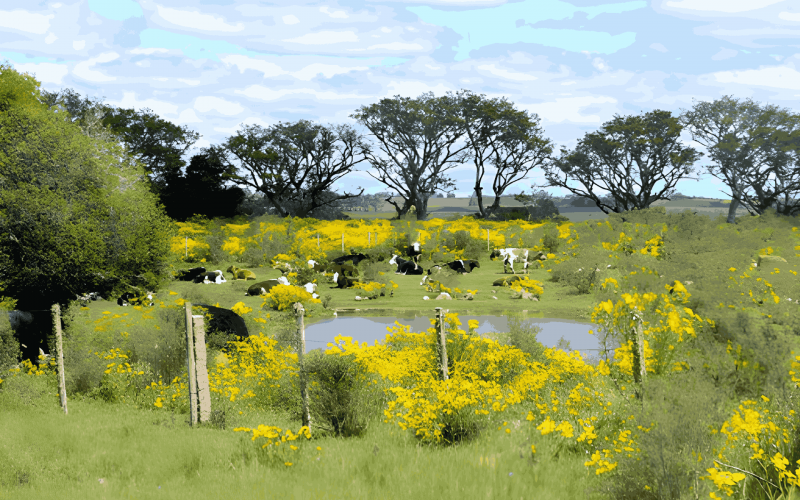
A chacra is a smaller rural property designed for lifestyle living. Most range from 5 to 20 hectares, although some can be slightly larger. They are often located within driving distance of Punta del Este, Maldonado, or other coastal towns, which allows buyers to enjoy the countryside without being isolated.
Chacras are primarily residential properties where the house and land complement each other. Buyers usually seek space for horses, small vineyards, olive groves, or vegetable gardens, along with privacy and scenic views. Maintenance is straightforward, allowing for full-time or seasonal living without hiring a large team of workers.
From a market perspective, chacras near established towns maintain steady demand. Prices vary depending on location, infrastructure, and amenities. A 5-hectare chacra with basic infrastructure might cost around $180,000, while a 15-hectare property with a modern house, road access, and utilities could reach $600,000. Properties closer to the coast or with panoramic views may exceed $800,000. Many foreign buyers prefer chacras because they balance lifestyle, accessibility, and resale potential.
What Is an Estancia?
An estancia is a large agricultural property, often hundreds or thousands of hectares. These properties are designed for cattle, sheep, crops, or forestry. The land itself is the primary asset, and its value is closely tied to productivity.
When considering an estancia, buyers need to evaluate soil quality, water availability, fencing, barns, corrals, road access, and operational requirements including full-time staff and equipment. Prices are calculated per hectare and can vary widely. Productive cattle land in Lavalleja may start around $1,500 per hectare, while top-quality grazing land near Maldonado can reach $3,500 per hectare or more.
Buying an estancia is a business decision as much as a lifestyle choice. Very few foreign buyers require an estancia unless they plan to enter agriculture or make a long-term land investment.
Lifestyle Differences: Be Honest With Yourself
Ask yourself whether you want to live in the countryside or operate it. A chacra works if you want peaceful mornings, space for horses or gardens, access to restaurants, schools, and services within 30 minutes, flexible living arrangements, and predictable maintenance costs.
An estancia is different. You are running a property as a business, managing agricultural cycles, labor, and production planning. Responsibilities increase dramatically with land size, and it is not simply a larger version of a chacra. One real scenario illustrates this clearly: a US buyer considered 500 hectares inland but realized the operational demands were too high. They purchased a 12-hectare chacra near Maldonado instead and now enjoy privacy, proximity to amenities, and a lifestyle that fits their goals.
Property Prices and Market Trends
Chacras near Punta del Este, José Ignacio, and Maldonado are driven by lifestyle migration and foreign demand. Prices depend on infrastructure, utilities, and views. Well-located properties with road access and modern houses sell faster and retain value.
Estancias are valued differently. Soil quality, water access, and agricultural infrastructure such as fencing, barns, and staff housing are the main factors. Market trends for estancias track agricultural performance and global commodity prices rather than tourism or lifestyle demand. From an investment perspective, chacras near growth corridors tend to appreciate as surrounding areas develop, while estancias offer scale and long-term land security but appeal to a narrower buyer pool.
Legal and Practical Considerations for Foreign Buyers
Uruguay allows foreigners to buy rural property without residency. Foreigners have the same legal rights as locals. Due diligence is essential. This includes verifying title and ownership history, confirming boundaries with a proper survey, reviewing water rights, and understanding tax obligations. Estancias require additional checks for agricultural taxes, operational permits, and labor management. Working with an experienced real estate advisor and a qualified escribano is critical to avoid complications.
Why Choose La Cite Real Estate?
LA CITÉ REAL ESTATE provides foreign buyers with practical, local expertise. They have a deep understanding of which areas are gaining value, where infrastructure is improving, and which properties are realistically priced. Their experience with international buyers means they can coordinate remote viewings, manage currency transfers, and guide clients efficiently through legal and financial steps.
Access to current and off-market listings is another advantage. Many chacras and estancias are never publicly advertised. La Cite leverages local relationships to provide buyers with opportunities they might not find elsewhere. Transaction management is handled with precision, from surveys to document verification, ensuring a smooth process. Their advice is honest and practical, helping buyers match property type to lifestyle, management capacity, and budget.
Frequently Asked Questions
Can foreigners buy estancias in Uruguay?
Yes. Foreigners can legally purchase rural property without residency. Large acquisitions often benefit from structured ownership through a local company. Legal and tax advice is recommended to ensure compliance with regulations.
Are chacras a good investment?
Chacras near established towns like Punta del Este and Maldonado show consistent demand. Properties with road access, utilities, and modern houses tend to retain value. Lifestyle-driven demand from international buyers supports long-term appreciation.
Do estancias generate income?
Yes, if managed professionally. Income can come from cattle, crops, forestry, or leasing. Success depends on soil quality, rainfall, and operational efficiency. Professional management is typically required.
Is financing available for rural property?
Financing is limited. Most rural purchases are completed in cash. Some banks offer financing under specific conditions. Buyers should plan liquidity and currency transfers in advance.
Which property is easier to resell?
Chacras near towns and the coast usually have broader buyer appeal, making resale simpler. Estancias appeal to a smaller, specialized market, and resale may take longer.
Final Thoughts
Choosing between a chacra and an estancia is about lifestyle, responsibilities, and goals. A chacra provides manageable rural living with flexibility and proximity to amenities, while an estancia offers scale and agricultural income but requires operational management.
Next Steps: Request a curated list of current chacras or estancias, schedule a consultation, and gain access to off-market properties. Speak with LA CITÉ REAL ESTATE today to make your move with confidence.