


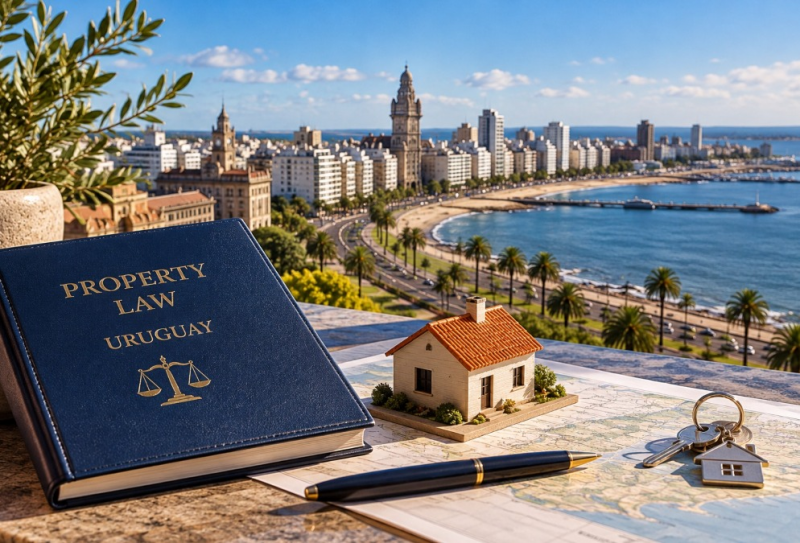
Uruguay is one of the more accessible South American property markets for international buyers, but “foreigners can buy property” is only the starting point.
Most overseas buyers looking at apartments, houses or coastal homes can purchase directly without first becoming Uruguayan residents. The more complex questions arise when the property is rural, held through a company, intended for agricultural use or part of a larger investment structure.
The legal process also places significant responsibility on the escribano, who investigates title, reviews registry information, prepares the transfer documentation and handles the formal registration of ownership.
La Cité Real Estate has operated in Uruguay since 1993 and works with international buyers across Montevideo, Punta del Este, José Ignacio and other parts of the country. This guide explains what foreign buyers can generally own, where extra legal scrutiny is required and what should be checked before committing funds.

Can Foreigners Buy Property in Uruguay?
For standard residential property, the answer is generally yes.
International buyers can purchase apartments, houses and other residential property without first obtaining Uruguayan citizenship or permanent residency. Property ownership and immigration status are separate legal issues.
This means a buyer can purchase a home in Uruguay as a non-resident and later decide whether to pursue temporary or permanent legal residence.
Read La Cité's complete guide to buying property in Uruguay as a foreigner.
What Types of Property Can Foreign Buyers Purchase?
For most international buyers, the market can be divided into three broad categories.
| Property Type | Typical Foreign Buyer Position | Extra Checks |
|---|---|---|
| Urban residential | Generally accessible to foreign individuals | Title, debts, condominium rules and permitted use |
| Coastal homes | Generally accessible, subject to the same planning and property rules | Planning, boundaries, access, environmental restrictions and building approvals |
| Rural or agricultural property | Can require additional legal analysis, particularly where companies or agricultural operations are involved | Ownership structure, corporate form, agricultural use and Law 18.092 compliance |
Buying an Apartment or House in Montevideo
An international buyer purchasing an apartment in Pocitos or a house in Carrasco is dealing with a relatively conventional residential transaction.
The main legal issues are not nationality restrictions but whether the seller has clean title, whether registered charges affect the property, whether taxes and building expenses are up to date and whether the legal documentation matches the property being sold.
For an apartment, the buyer should also review the condominium documentation, gastos comunes and any building rules that may affect rental or future use.
Explore La Cité's Montevideo Real Estate Guide.
Can Foreigners Buy Coastal Property?

Foreign buyers can generally purchase residential property in coastal markets such as Punta del Este, José Ignacio and La Barra.
The legal issue is usually not foreign nationality itself but the individual property's planning position, registered boundaries, construction approvals and any environmental or coastal rules affecting the site.
That distinction matters because the phrase “beachfront property” can describe anything from an apartment in an established condominium to a detached house on a large coastal plot. Those two purchases can require very different levels of due diligence.
Read La Cité's guide to beachfront living in Playa Brava.
Rural Property Requires More Careful Legal Review
Rural land is where the ownership analysis becomes more specialised.
Uruguay's Law 18.092 regulates ownership of rural real estate and agricultural operations. The legislation places particular emphasis on the legal form of entities holding rural property and on whether corporate ownership meets the statutory requirements.
For example, the law allows certain companies to hold rural property where their capital is represented in qualifying registered form and ultimately held by individuals. Other structures, including some non-resident entities, trusts and investment funds, may require specific Executive authorisation.
This is different from saying that every foreign individual is prohibited from owning rural land above a fixed number of hectares. The correct analysis depends on the buyer, the legal structure and the intended use of the land.
Why the Ownership Structure Matters
Most buyers purchasing one home for personal use do not need a corporate structure simply because they are foreign.
Companies become more relevant where the acquisition forms part of a wider commercial operation, portfolio, development or rural investment.
Using a company can introduce separate registration, accounting, tax and corporate-governance obligations. It should therefore be chosen because it solves a specific legal or commercial problem rather than because an overseas buyer assumes it is necessary.
A Uruguayan lawyer or escribano should assess the proposed structure before an entity is formed or a deposit is paid.
What Does the Escribano Check?
The escribano público is central to the transaction.
Before significant money is committed, the buyer needs to establish whether the seller is legally entitled to transfer the property and whether any registered rights, debts or restrictions affect it.
For a foreign buyer, the escribano can investigate the property's legal history, review registry information, prepare the required legal instruments and arrange registration of the completed transaction.
Read La Cité's guide to the role of the escribano.
Due Diligence Before You Pay a Deposit
- Confirm legal ownership: establish that the seller is entitled to transfer the property.
- Review registered charges: check for mortgages, liens, usufructs or other rights affecting the title.
- Check property taxes: confirm the relevant property obligations are current.
- Verify construction: make sure significant buildings and additions are supported by the required documentation.
- Review boundaries: especially important for detached, rural and coastal property.
- Check condominium obligations: for apartments and managed developments.
- Review intended use: confirm the property's legal status is compatible with how you plan to use it.
- Assess rural ownership rules: where agricultural property or a corporate ownership structure is involved.
What Tax Does a Foreign Buyer Pay on the Purchase?
Uruguay's Impuesto a las Transmisiones Patrimoniales, or ITP, applies to property transfers.
The Dirección General Impositiva currently states that the rate is 2% for the buyer and 2% for the seller in an onerous property transaction.
Importantly, the tax is calculated using the applicable cadastral value determined under Uruguay's rules rather than simply applying 2% to the advertised purchase price.
Buyers should therefore ask their escribano for a property-specific cost estimate before completion.
Read La Cité's guide to property buying costs in Uruguay.
What Happens if a Foreign Owner Rents the Property?
Owning a property and earning income from it are separate tax questions.
Uruguay's DGI currently states that a non-resident individual receiving rental income from Uruguayan property is subject to IRNR.
Where a withholding agent such as an estate agency is involved, the current withholding is calculated at 10.5% of rental income. Where there is no withholding agent, the non-resident owner is responsible for the corresponding monthly advances.
International buyers should obtain personal tax advice because home-country tax and reporting obligations may also apply.
Rural Property and Agricultural Ownership

Buyers considering an estancia, vineyard, farm or other rural property should treat it as a specialist transaction rather than assuming the residential rules apply unchanged.
Law 18.092 specifically addresses ownership of rural property and agricultural operations. One of its key objectives is to regulate the legal persons and corporate structures capable of holding this type of asset.
The legislation also provides a mechanism for Executive authorisation in certain cases where the ownership structure does not fit the standard permitted categories.
Before buying rural property, obtain advice on the proposed ownership structure, agricultural activity, water rights, boundaries, environmental issues and any additional approvals required.
Can a Foreign Company Own Property in Uruguay?
Foreign companies can have property interests in Uruguay, but their registration and tax obligations differ from those of an individual buyer.
Uruguay's DGI maintains a specific registration procedure for foreign entities whose activity in the country is limited to owning real estate.
Rural property needs additional attention because Law 18.092 applies specific rules to corporate ownership of rural real estate and agricultural activities.
For an individual buying one apartment or home, a company is therefore not something to establish automatically. Its value depends on the tax, succession, liability and commercial objectives of the buyer.
Can You Buy Property Remotely?
International buyers do not always need to be physically present for every stage of a transaction.
A properly prepared power of attorney may allow a trusted representative to carry out specified acts on the buyer's behalf. The exact wording and formalities should be prepared for the individual transaction rather than copied from a generic template.
Foreign documents may also require apostille or legalisation and Spanish translation depending on their purpose.
Foreign Buyer Legal Checklist
- Decide whether the property will be purchased personally or through an entity.
- Appoint an experienced Uruguayan escribano before transferring significant funds.
- Confirm title, seller authority and registered encumbrances.
- Review planning and building documentation.
- Check condominium fees and rules for apartment purchases.
- Confirm the tax base and transaction costs for the exact property.
- Prepare source-of-funds documentation for the purchase.
- Obtain specialist advice before buying agricultural or other rural property.
- Check home-country tax and reporting obligations before completing the purchase.
How La Cité Supports Foreign Property Buyers
La Cité Real Estate has operated in Uruguay since 1993 and works with overseas buyers looking at both permanent homes and investment property.
Its role includes helping buyers compare locations and properties while coordinating with the professional advisers required for the legal and financial side of the purchase.
For buyers who will spend substantial time outside Uruguay, La Cité also provides property management and relocation support alongside its sales operation.
Considering buying property in Uruguay as a foreigner?
Contact La Cité Real Estate to compare current properties and understand the practical steps involved in purchasing in Uruguay.
Call the Punta del Este office on +598 4244 5368 or email lacite@lacite.com.uy.
Frequently Asked Questions
Can foreigners buy houses and apartments in Uruguay?
Generally, yes. Foreign buyers can purchase standard residential property without first becoming Uruguayan residents. The individual property's legal position still needs to be checked by an escribano.
Do I need residency before buying property?
No. Property ownership and legal residency are separate processes. A non-resident can generally purchase residential real estate and decide separately whether to pursue residency.
Can foreigners buy rural land?
Rural property requires more specialist analysis than an apartment or urban home. Law 18.092 regulates ownership of rural land and agricultural operations, especially where companies, trusts or other entities are involved.
Do I need to form a Uruguayan company?
Not simply because you are a foreign buyer. Many individuals purchase residential property directly. A company should be considered only where there is a specific legal, tax or commercial reason for using one.
What property transfer tax does the buyer pay?
Uruguay's DGI currently states that ITP is charged at 2% to the buyer in an onerous property transfer. The tax base is determined under the applicable cadastral valuation rules.
Can I complete a property purchase from overseas?
Some transactions can be completed using an appropriately drafted power of attorney. The required document should be prepared specifically for the purchase and may need apostille or legalisation and Spanish translation.
Understanding the Rules Before You Buy
Uruguay's residential property market is relatively open to international buyers, but openness should not be confused with an absence of legal checks.
For most buyers, the priority is straightforward due diligence: confirm title, understand the property's legal status, budget the transaction correctly and use an experienced escribano.
Rural and agricultural property deserves more specialist treatment because the ownership structure can determine which rules apply.
Speak to La Cité Real Estate to explore current opportunities and begin your Uruguay property search with the right local support.